
Joint Injections — Knee, Shoulder, Hip, Elbow, Wrist
Arthritis flare, bursitis or tendinitis that is not settling: a cortisone-type injection after an exam and X-ray, usually at the same visit. No referral needed.
Under 15-minute average wait · Open 8 AM – 8 PM every day · Walk in or check in online
Palm Beach Gardens
3375 Burns Rd #204, Palm Beach Gardens
8:00 AM – 8:00 PM
Stuart
6522 S Kanner Hwy, Stuart
8:00 AM – 8:00 PM
Self-pay options available · CareCredit accepted · Check with your insurance before your visit to understand your coverage
Relief for an Inflamed Joint
Cortisone-type injections calm inflammation directly where it hurts and are a standard treatment for arthritis flares, bursitis and tendinitis when rest and over-the-counter relief are not enough. The injection is never the first step: the provider examines the joint, takes an X-ray on site if one is needed, and confirms an injection is the right call before offering it. When it is, it is usually done at the same visit; occasionally a short follow-up makes more sense. Relief typically builds over the days that follow and lasts weeks to months. Walk in 7 days a week, 8 AM to 8 PM.
We give cortisone-type injections into joints and bursae after an exam and X-ray. We do not do stem-cell or cosmetic injections, and joints that need surgery or specialist imaging are referred to orthopedics.
Quick Facts
| Detail | Information |
|---|---|
| Hours | Open Daily | 8 AM – 8 PM |
| Average wait | Under 15-minute average wait |
| Walk-In | Yes — no appointment or referral needed |
| Joints | Knee, shoulder, hip (bursa), elbow, wrist |
| Before Injecting | Exam first; X-ray on site when needed |
| Procedure | Numbed; a brief procedure |
| Insurance | Self-pay options available · CareCredit accepted · Check with your insurance before your visit to understand your coverage |
A hot, swollen joint with fever, or a joint you cannot bear weight on after a fall, is checked urgently — and sent to the ER if it could be an infection or fracture we cannot manage here.
Conditions We Inject For
- Osteoarthritis flare — knee, hip, shoulder
- Bursitis of the shoulder, hip (trochanteric), knee or elbow
- Tendinitis — rotator cuff, tennis or golfer's elbow
- Frozen shoulder (adhesive capsulitis)
- Knee pain from wear-and-tear changes
- Trigger finger
- Joint pain not responding to rest and over-the-counter relief
Exam and X-Ray First
Before any injection the provider reviews your history, examines the joint and its range of motion, and takes an X-ray on site if it has not been done recently — to make sure an injection is appropriate and nothing else is going on. The procedure itself is brief: the skin is cleaned, the area is numbed, the injection is given, and you are watched briefly afterward. Written instructions cover activity over the following days and what to expect.
What Happens at the Visit
Check in (walk in or check in online); tell us which joint and how long it has been bothering you.
Exam of the joint and an on-site X-ray if one is needed to confirm the injection is the right treatment.
If an injection is appropriate: skin cleaned, area numbed, injection given, brief observation — usually at the same visit, sometimes at a short follow-up.
Written instructions for the days after the injection and a plan for activity and strengthening.
After the visit: relief typically builds over the following days and lasts weeks to months; return for a recheck or a repeat injection (no more than three to four per joint per year), and we refer to orthopedics if the joint needs surgery or specialist imaging.
Diagnostic Capabilities
After Your Injection
Most people resume normal activity right away but should avoid strenuous use of the joint at first, as instructed. Brief soreness at the site is common. Pain relief usually builds over the following days and can last weeks to months. Repeat injections may be appropriate when symptoms return — typically no more than three or four per joint per year. Contact us for fever, severe pain or significant swelling after an injection.
Available at Both Locations
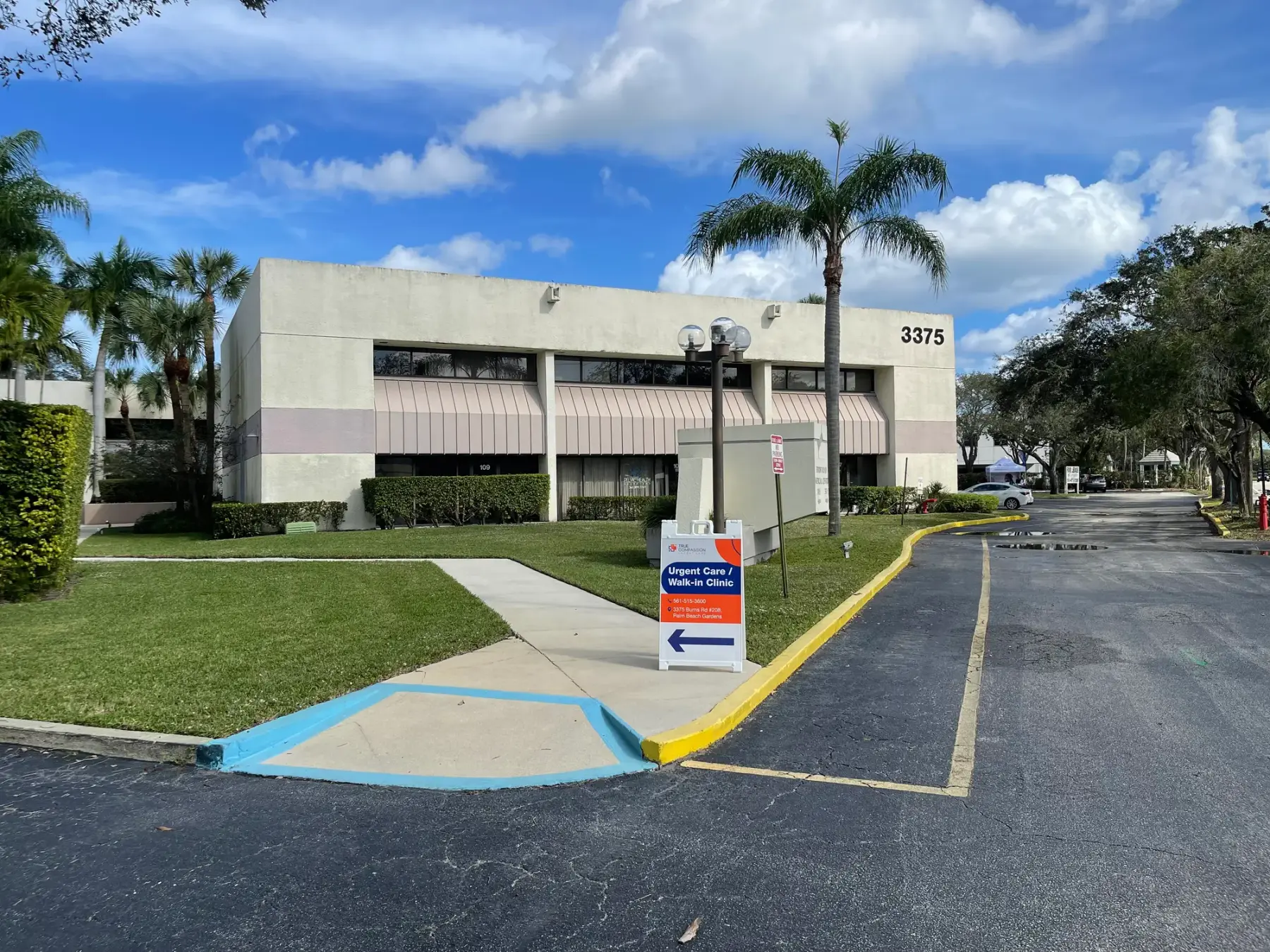
Palm Beach Gardens, FL 33410
DIRECTIONS
Across from Palm Beach Gardens Medical Center
Signs in the parking lot point to the best entrance - look for Entrance B
PHONE
(561) 515-3600HOURS
8:00 AM – 8:00 PM
Walk-Ins Always Welcome
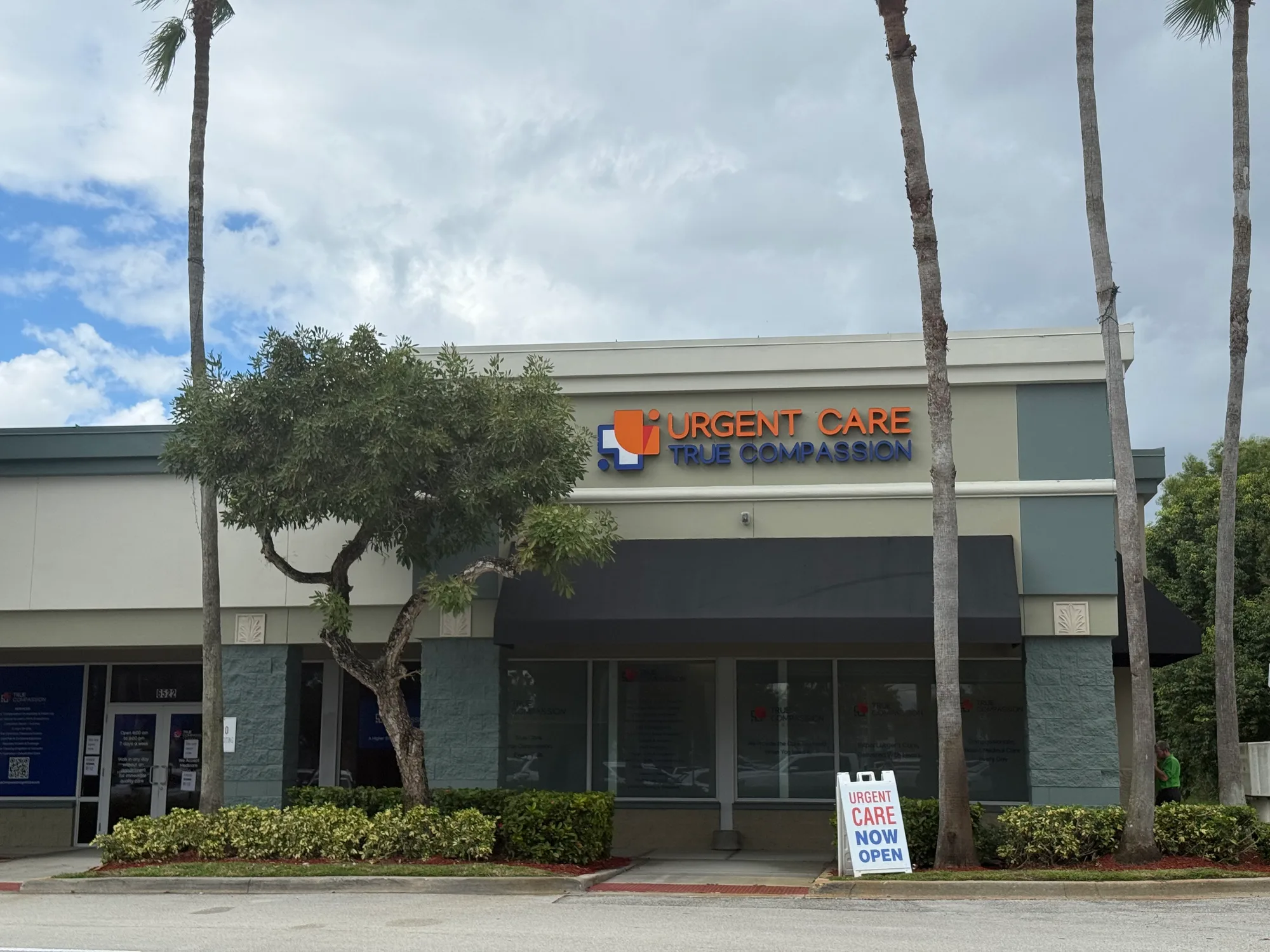
Stuart, FL 34997
DIRECTIONS
Kanner Crossing shopping center with Publix
Located next to UPS - easy to find from S Kanner Highway
PHONE
(561) 515-3600HOURS
8:00 AM – 8:00 PM
Walk-Ins Always Welcome
Frequently Asked Questions
No. Walk in 7 days a week, 8 AM to 8 PM, or check in online. No referral is needed.
Usually, yes — after the exam and any X-ray confirm it is appropriate. Occasionally the provider will ask you to come back for a short follow-up instead. It is never promised before you have been examined.
The area is numbed first. Most people describe pressure and a brief sting; the injection itself takes seconds.
It varies by joint and condition — commonly weeks to months. Some conditions respond better than others.
Knees, shoulders, hips (the outer bursa), elbows and wrists. The provider decides at the exam whether your joint is a good candidate.
Usually mild: temporary soreness at the site, a brief flare the first night, lightening of the skin at the spot, or a temporary rise in blood sugar for people with diabetes. Serious complications are rare with sterile technique.
Insurance coverage varies by plan, so please check with your insurance before your visit to understand your coverage. Self-pay options are available, and CareCredit is accepted.
This information is for educational purposes only and does not constitute medical advice. The content on this page is not intended to diagnose, treat, cure, or prevent any disease or health condition. Always consult your physician or qualified healthcare provider with any questions about a medical condition.
In case of a medical emergency, call 911 immediately. Do not rely on this information for emergency medical treatment.
No physician-patient relationship is created by viewing this content. This information does not replace in-person evaluation and treatment by a licensed medical professional.
Content medically reviewed: November 8, 2026
Ready to Get Care?
Walk-ins welcome at both locations. Open daily 8am-8pm.